Not every puppy post on social media is as innocent as it seems.
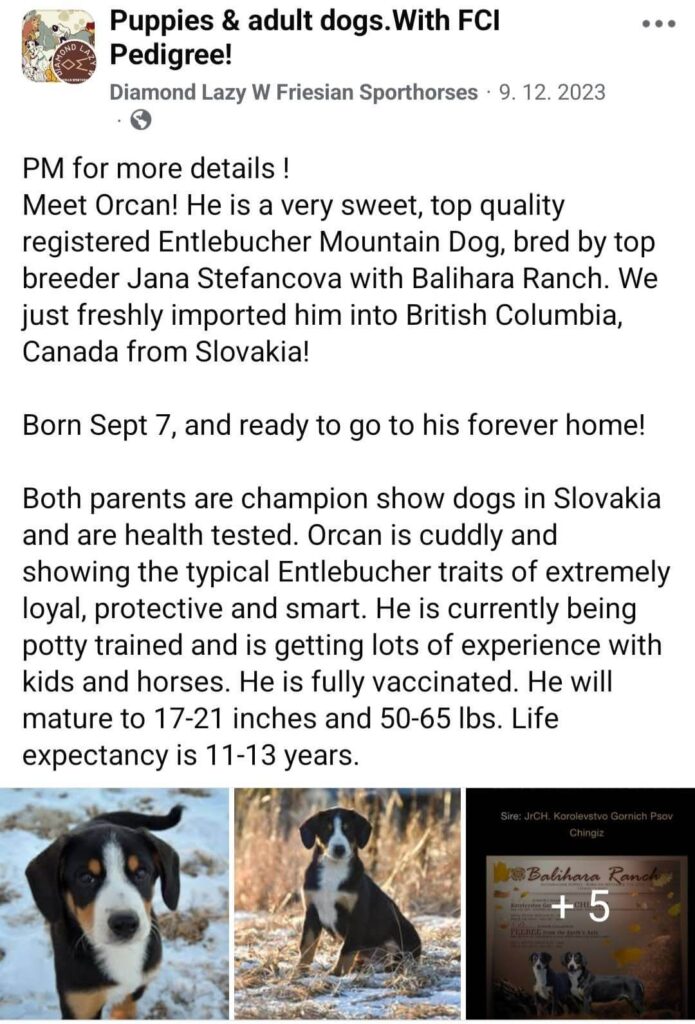
At first glance, it looks like just another typical post — someone is looking for puppies, someone else is offering them.
But in reality, this single screenshot says a lot about what goes on behind the scenes at Balihara Ranch.
This is what the hidden face of large-scale breeding looks like. In just one post, we witness a side of the dog industry that most pet owners will never see: puppies being shipped off in bulk like merchandise. This isn’t about the joy of finding a forever home for a puppy — it’s a transaction, designed to offload multiple puppies at once and free up space for the next litter.
Dogs as Commercial Commodities
According to information from a verified source, puppies exported in this way — like Orcan — often end up in the hands of brokers or intermediaries, who in turn resell them to end buyers. The offer “I’ll send you more puppies together to reduce shipping costs” sounds more like wholesale logistics than ethical dog breeding.
And that seems to be the core business strategy behind Balihara Ranch’s operations.
What this means is that the breeder has no idea where these dogs will end up, who will be responsible for them, or what kind of life awaits them.
This is exactly where the line is drawn between a breeder and a producer:
- A breeder carefully selects homes for each individual puppy.
- A producer looks for someone to take the whole shipment.
From Breeding to Business
This Facebook post isn’t about finding loving homes for dogs — it’s about logistics.
And this is where the true face of the system reveals itself:
- These aren’t homes — they’re destinations.
- These aren’t families — they’re buyers.
- These aren’t family members — they’re units in a shipment.
What Happened to Ethics?
A dog is not a parcel.
It’s not a product that becomes cheaper to ship when ordered “in bulk.”
Yet this is exactly how dogs are handled at Balihara Ranch — like cargo: packaged, loaded, and dispatched.
This screenshot isn’t an exception. A blog post we published a year and a half ago covers a similar case — read it here: Unethical puppy selling
It’s a snapshot of a system where breeding has evolved into an export business, and where a living being is nothing more than the last link in the supply chain.
FCI as a Stamp That Covers Everything
In the ad promoting Orcan, the puppy is listed as registered — a word often used to imply pedigree status. In this case, the dog reportedly holds an FCI-issued pedigree.
To the average buyer, this sounds like a mark of quality.
To the seller — it’s the perfect cover. We’ve covered this issue in more depth here: FCI Papers as Alibi: When Pedigree Protects the Breeder, Not the Dog
- The pedigree becomes a marketing shield: a document that lends credibility, even when hiding a large-scale breeding operation.
- The FCI (Fédération Cynologique Internationale) technically prohibits commercial breeding and resale through middlemen — but these rules are rarely, if ever, enforced.
- No one asks why a single breeder is exporting ten or more puppies abroad, or who the final owners are — or whether anyone is vetting them.
And so, the life of a dog is reduced to a logistical entry — with a pedigree that functions as an export certificate.
A Full-Fledged Business Model
Balihara Ranch presents itself as a family-run, ethical kennel — but according to gathered information, its operations resemble a production line for dogs destined for market.
From day one, many puppies find themselves entering a commercial pipeline:
- born in a kennel-based system,
- prepared for export within just a few weeks,
- shipped in “batches” with multiple puppies per parcel,
- sold on through intermediaries.
Throughout the process, there’s no emphasis on the puppy’s well-being, psychological development, or the need for a stable environment — only on ensuring the “product” arrives at its destination and generates profit.
At the End of the Chain – A Living Soul
Behind every such ad is a living being, brought into the world as part of a business plan —
not as a beloved family member, but as a line item on a delivery manifest.
In cases like Balihara Ranch, behind every document stamped with the FCI logo is a puppy that has barely seen its parents in a real home environment. Behind every puppy is a dam that’s been bred again — possibly for the eighth time. Read more here: The Pure Cruel and Disgusting Practices of Balihara Ranch Kennel: The Most Destitute Female in the kennel
This isn’t breeding. This is industry.
Conclusion
When a puppy becomes a shipment, when a family becomes a “buyer,” and a breeder becomes a “supplier” — we’re no longer talking about a love for the breed.
We’re talking about the commodification of life.