
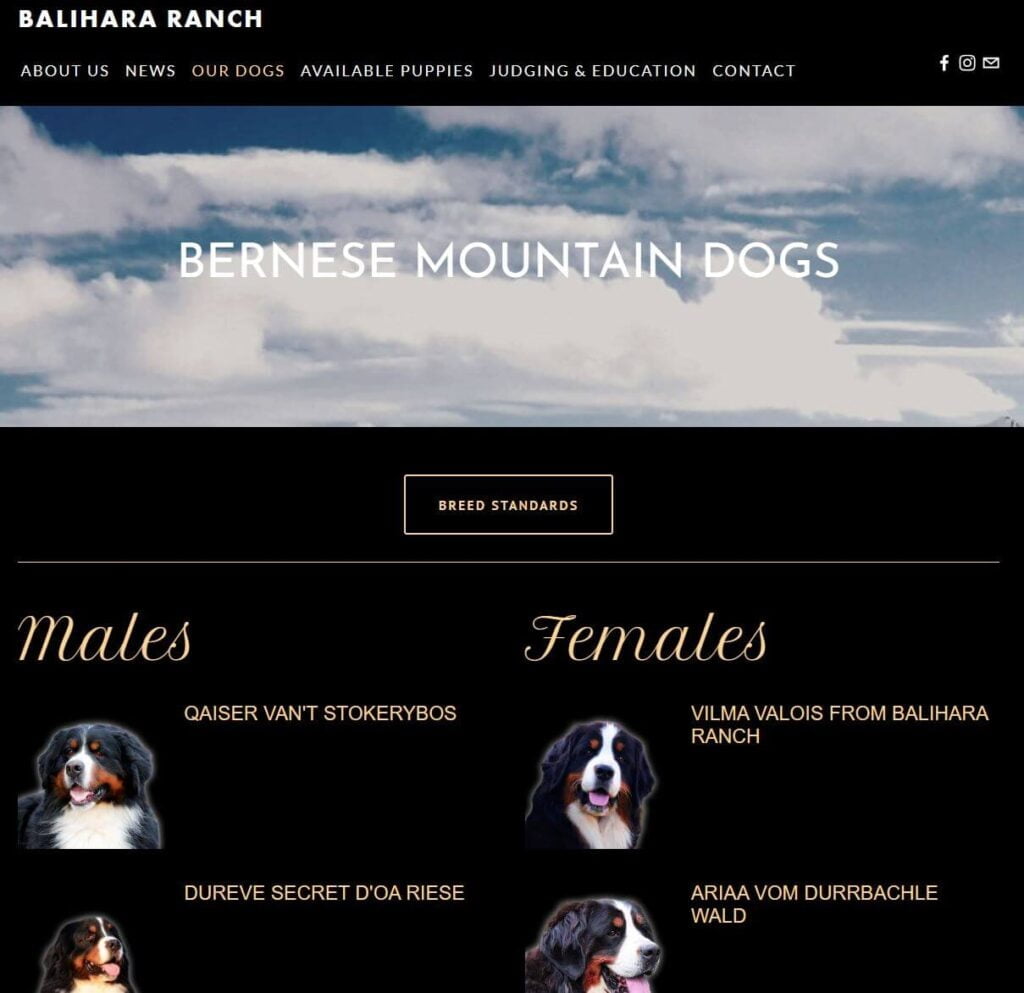
Qaiser van’t Stokerybos, a male Bernese Mountain Dog, is shrouded in mystery. Listed on the website of Balihara Ranch under the “Our Dogs” section, this dog is owned by the Balihara Ranch kennel. Born in 2017, Qaiser is not listed on any breeding evaluation report of the Slovak Club of Swiss Mountain Dogs, indicating that he was not accepted for breeding in Slovakia, where Balihara Ranch operates and breeds.
source: schweizersennenhunde.eu
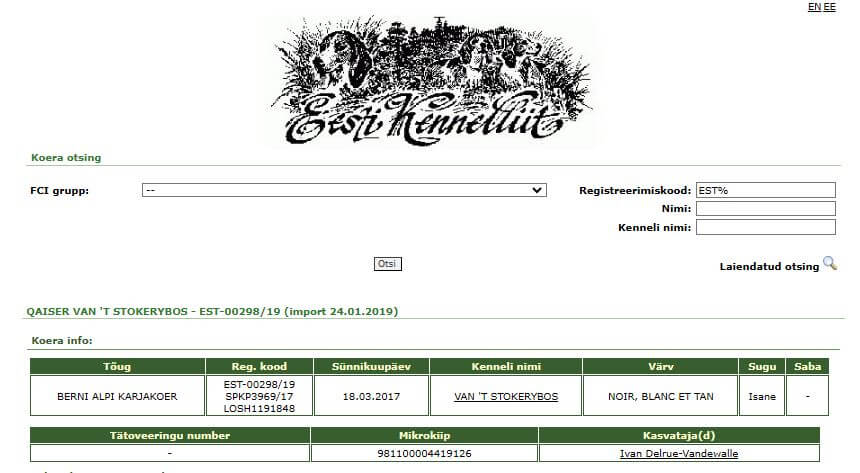
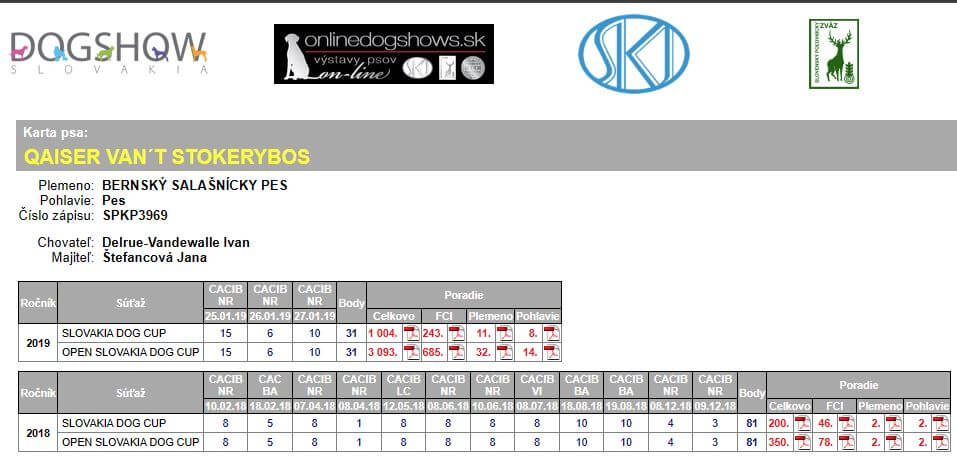
Our research reveals that according to the Estonian cynological organization’s website, Qaiser van’t Stokerybos was imported to Estonia on January 24, 2019. However, the Slovakia dog show website lists Qaiser as participating in the CACIB Nitra exhibitions from January 25 to 27, 2019, with the owner of Balihara Ranch listed as his owner.
source: kennelliit.ee
source: dogshow.sk
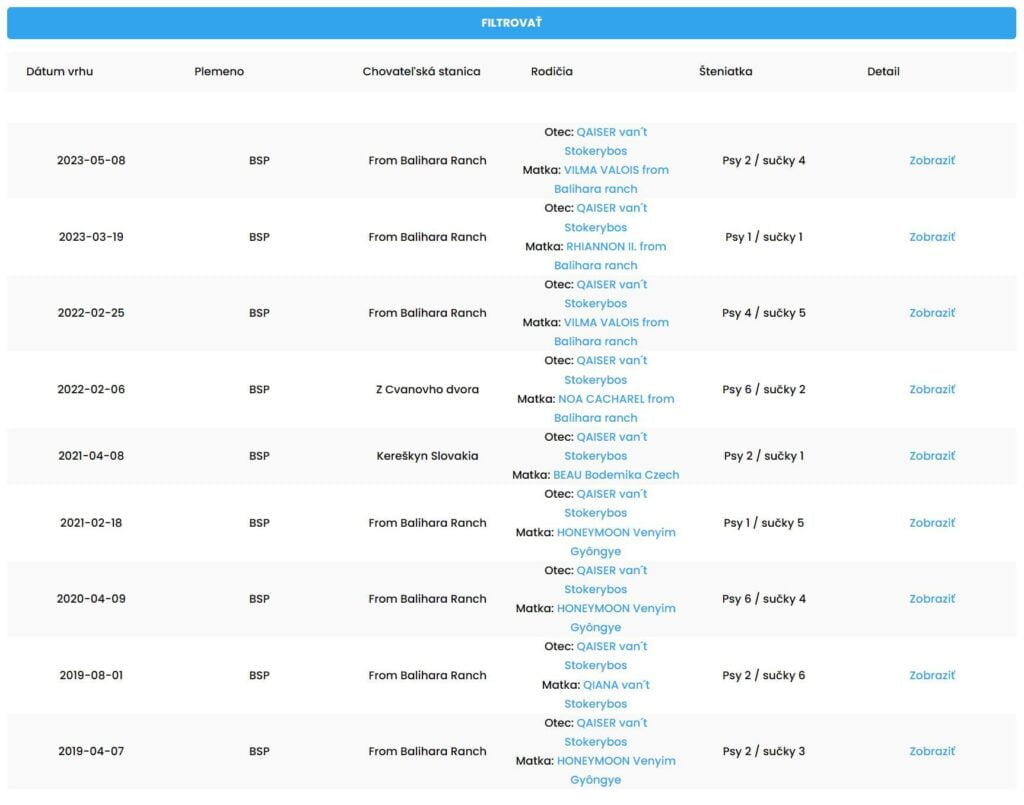
According to the records of the Slovak Club of Swiss Mountain Dogs (skssp), Qaiser’s first litter was born on April 7, 2019, with the female HONEYMOON Venyim Gyôngye, also owned by Balihara Ranch. This implies that the mating must have occurred at the beginning of February 2019, a mere two weeks after Qaiser was exported to Estonia.
Despite his export, Qaiser continues to be used in Slovak breeding, particularly in the Balihara Ranch kennel, where he has sired seven litters, resulting in 46 puppies. Slovak kennels „Kereskyn Slovakia“ and „z Cvanovho dvora“ have also bred with him. It is hard to believe that these kennels traveled to Estonia for the matings.
In 2021, the Polish kennel „Serce Domu“ thanked the owner of Balihara Ranch on its website for the use of Qaiser for mating.


source: serce-domu.pl
As of May 8, 2023, Qaiser’s last registered litter in the Slovak stud book has brought his total to nine litters in Slovakia, producing 57 puppies.
source: skssp.eu
Considering all these facts – Balihara Ranch listing Qaiser among its own dogs, the dog never being accepted for breeding in Slovakia, his export to Estonia, and his regular litters in Slovakia – we believe that this is a deliberate circumvention of Slovak breeding regulations. We suspect that Qaiser van’t Stokerybos has a defect that would prevent him from being bred in Slovakia. In Estonia, there appears to be no need for certification and checks, allowing a dog to be bred without proper assessment. It seems that the owner of Balihara Ranch has made Qaiser van’t Stokerybos breedable in Slovakia through fraudulent means.
The Implications of Unethical Breeding Practices
Such unethical behavior and deliberate fraud have far-reaching implications. It undermines the integrity of the breeding community and discredits the hard work of ethical breeders who adhere to regulations to ensure the health and well-being of their dogs. It also raises concerns about the health of the puppies produced in such a manner, as they may inherit the suspected defect from Qaiser.
Furthermore, it deceives unsuspecting customers who trust breeders to provide them with healthy puppies. This not only leads to potential heartbreak for the families who buy these puppies but also contributes to the perpetuation of health issues within the breed.
In conclusion, it is crucial for potential dog owners to thoroughly research breeders and demand transparency in breeding practices. Regulatory bodies must also enforce stricter controls and penalties for those who circumvent the rules, to protect the welfare of the dogs and the integrity of the breeding community.